Rail Switch Heaters: A Quiet Revolution in Railroad Safety


Rail transport offers a safe, fast, and economical solution for both urban and intercity travel. However, for this system to operate uninterrupted, the infrastructure must remain functional under all conditions. Especially during winter months, snow and ice can prevent the operation of switches, one of the most critical components of rail systems. Solving this problem... Ray-Scissor HeatersIt has become an indispensable part of railway safety.
What is a Ray-Makas Heater?
Rail switch heaters are electric heating systems used to prevent switches on railway and tram lines from freezing. Switches are movable rail sections that allow trains to change direction. Icing or snow accumulation on these sections can cause the train to go in the wrong direction or even derail. Rail switch heaters eliminate this risk by applying heat directly to the switch area, preventing the formation of snow and ice.
Working Principle
Rail-scissor heating systems are generally based on two basic technologies:
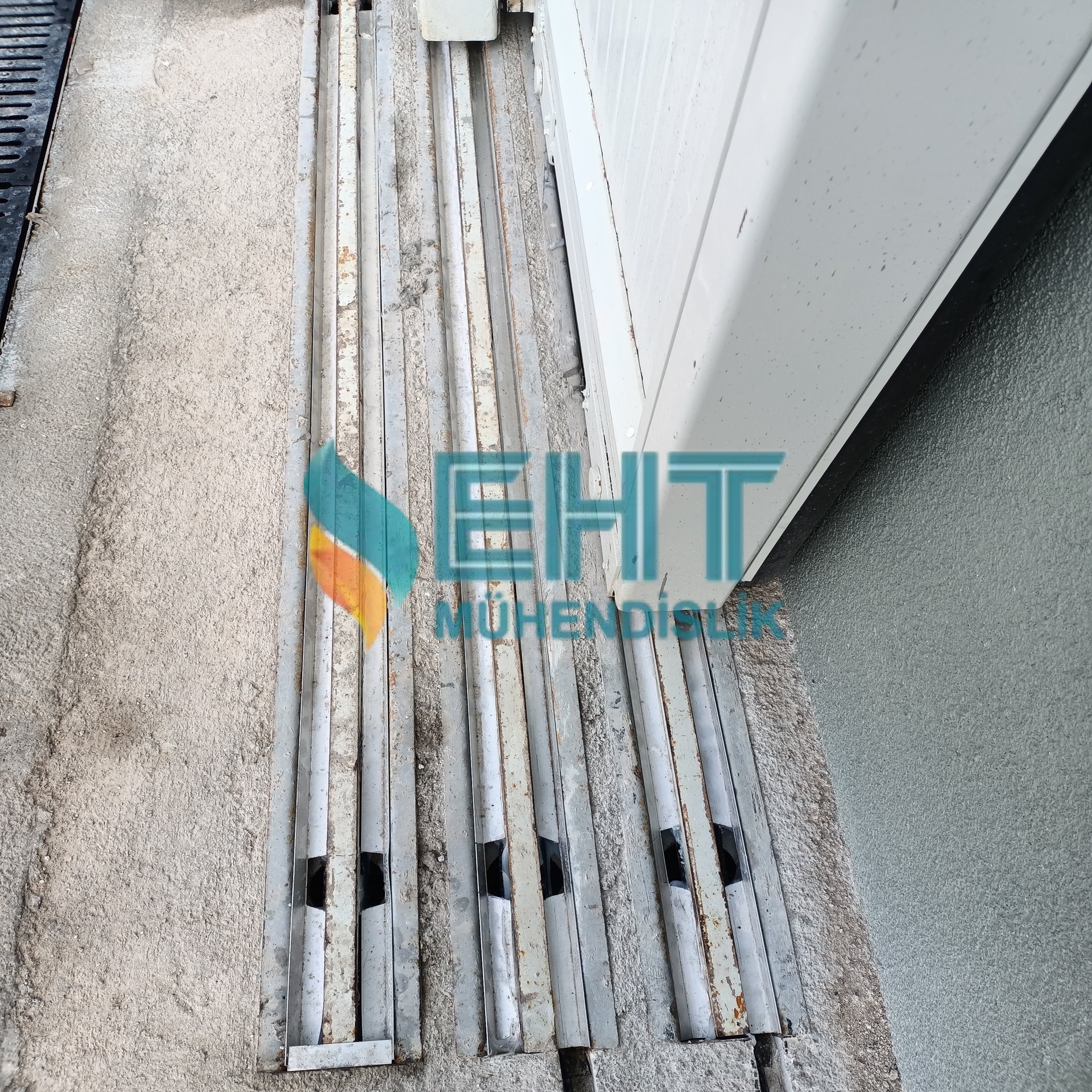
- Rod resistors: Mineral insulated (MI) heating elements provide direct heat by being fixed to the rail profile. They offer high durability and a long service life.
- Heating cables: Self-regulating cables automatically adjust power output according to temperature changes. This is advantageous in terms of energy efficiency.
These systems work integrated with PLC (Programmable Logic Control) and automatically activate according to rail temperature, optimizing energy consumption.
A Critical Role in Winter Conditions
One of the biggest problems experienced in railway systems during the winter months is the freezing of switches, rendering them inoperable. This situation:
- Flight cancellations
- Delays
- Security risks
- Increased maintenance costs
This can be the reason. Rail-scissor heaters prevent these problems, ensuring the system operates without interruption. These systems are vital, especially in regions with heavy snowfall.
Technical Specifications
Rail-switch heating systems can be custom-designed to suit different rail types and switch structures. Key technical features include:
- Power range: Modules typically range from 4×6 kW to 8×6 kW.
- Material: High-strength materials such as stainless steel, MI cable, and Teflon coating.
- Protection class: IP67 and above water and dust resistant design.
- Assembly equipment: Special mounting brackets that can be fixed to the rail profile.
- Automation: Temperature-based automatic control with PLC.
Thanks to these features, the system delivers reliable performance even in challenging weather conditions.
Intelligent Control Systems
Modern rail-scissor heaters are equipped not only with heating but also with intelligent control systems. Through sensors:
- Ambient temperature
- Ray temperature
- Humidity rate
- Amount of snowfall
Data such as this is collected and analyzed. Based on this data, the system saves energy by operating only in the areas and for the durations where it is needed.
Ease of Installation and Maintenance
Rail-scissor heating systems are generally assembled using modular structures fixed to the rail profile. This allows for:
- Quick installation is provided.
- It offers easy access during maintenance.
- It exhibits resistance to vibration and external factors.
Connecting equipment can perform its function for many years without deformation.
Environmental Impact and Energy Efficiency
Rail-scissor heaters are designed to minimize energy consumption. Their self-regulating cable systems, in particular, reduce power output as temperature increases, preventing unnecessary energy use. This feature provides advantages in terms of both environmental sustainability and operating costs.
Application Areas
Rail-scissor heaters are commonly used in the following areas:
- Urban tram systems
- Metro lines
- Railways that transport freight and passengers
- Logistics centers
- Airport rail systems
Custom designs and power options can be offered for each application area.
Security and Certification
These systems are manufactured in accordance with international standards as they are critical for railway safety. Key certifications include:
- CE (European Certificate of Conformity)
- TSE (Turkish Standards Institute)
- IEC 60079 (Electrical equipment for explosive atmospheres)
- ISO 9001 (Quality management system)
These documents guarantee the product's reliability and quality standards.
Custom Design Options
Since each rail type and switch structure is different, manufacturers offer customized design services. Solutions can be developed to suit rail profiles such as UIC 60, S49, and S54. Furthermore, the systems can be integrated into existing signaling and control infrastructure.
Comparative Advantages
| Feature | Rail-Switch Heater | Manual Cleaning | Chemical De-icer |
|---|---|---|---|
| Automatic operation | ✅ | ❌ | ❌ |
| Energy efficiency | ✅ | ❌ | ❌ |
| Environmentally friendly | ✅ | ✅ | ❌ |
| Continuous protection | ✅ | ❌ | ❌ |
| Labor force needs | Low | High | Middle |
This table clearly demonstrates why rail-scissor heaters are more effective than other methods.
In conclusionRail switch heaters are a strategic solution that ensures the safe and uninterrupted operation of railway infrastructure even in winter conditions. Thanks to intelligent control systems, energy efficiency, and special design possibilities, they offer advantages both technically and economically. For railway operators, these systems are not just a convenience, but a necessity.