
Home-Indoor Floor Heating Cables
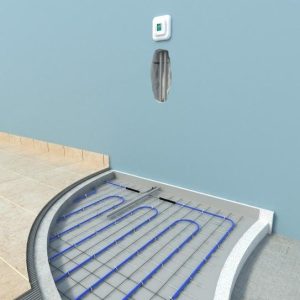
home heating system

How Do Heating Cables Work?
In underfloor heating systems, heat rises from the ground, allowing it to spread most efficiently throughout the environment. Because the heated air rises, the floor will remain cold and the ceiling will not be hot, as in other systems.
Our floor heating cables feature fluoropolymer insulation on the resistance wires, a metal foil braid, and an outer PVC sheath. They are terminated with 2.5-3 meter cold leads. They operate underground and quietly.
Indoor floor heating cables, such as those for homes and winter gardens, are typically series resistance heating cables. They are available in various lengths with specific resistance values and a 220-volt power supply. Heating cables can be single-conductor with a cold end termination on both ends and a 5 mm outer diameter, or double-conductor with a cold end termination on one end and a 6 mm outer diameter.
How to Select Heating Cable Ratings?
The power value is calculated based on the heat loss required to heat the application area. Once the required power is calculated, the installation is carried out using series-resistance cables that meet this power requirement. It can be installed in any desired area and to suit any layout. Overcurrent protection and thermostats ensure complete safety.
What are Floor Heating Mats?
Electric underfloor heating mats consist of flexible, durable mats onto which the heating cables are neatly secured. Thanks to their ease of installation, you can install them yourself without needing a technician.
What are Laminate Underfloor Heating Mats?
Homeowners with electric underfloor heating systems can choose between laminate or wood flooring. In wood flooring systems, heating cables are placed between two reinforced aluminum foil layers to distribute heat evenly across the floor. Mats are available in 80 W/m² and 140 W/m² capacities, depending on heating requirements. They are manufactured in factory-prepared lengths.
What are the advantages of underfloor heating systems with heating cables?
- Electric heating cable indoor floor heating has many advantages over other systems. provides.
- It does not require any odor, maintenance or repair.
- Cable thickness is around 7mm at most and does not take up a large volume in the room.
- There are no temperature differences in the heated area. The heat is spread homogeneously over the entire surface.
- It is frequently used in houses, balconies, baths, bathrooms and winter gardens.
- In heat calculation selection, series resistance cables with powers such as 17 watt/m - 20 watt/m are generally used.